What actually happens at a hearing evaluation
Hearing Evaluations
What actually happens at a hearing evaluation
Most people put off their first appointment because they don't know what it involves. None of it is uncomfortable, and you leave knowing exactly where your hearing stands.
A hearing evaluation isn't a pass-fail test. It's a measurement — of how your ears take in sound, how your brain makes sense of it, and where the gaps are showing up in everyday life. Nothing about it requires preparation, and nothing about it obligates you to buy anything.
The visit, step by step
- 1A conversation firstBefore any testing, we talk. Where do you struggle — restaurants, phone calls, the television, your grandchildren's voices? Your answers shape how we test and what we look for.
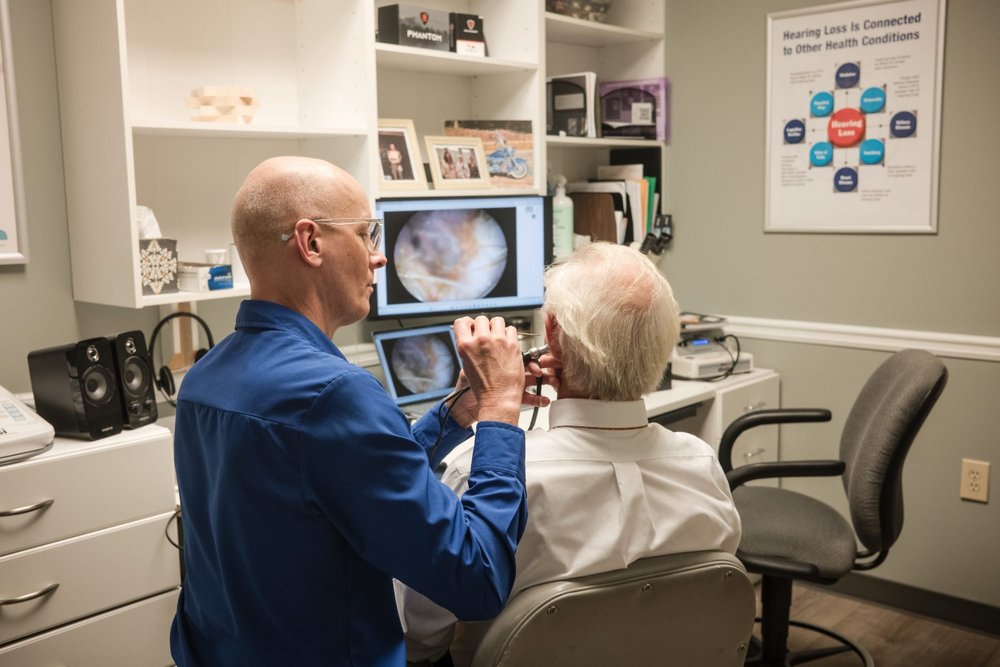
- 2A look inside your earsVideo otoscopy puts a live image of your ear canal and eardrum on the screen so you can see it too. Sometimes the whole problem is wax, and that's the end of it.
- 3Testing in the sound boothYou'll wear headphones and respond to tones across the pitch range, then repeat words at different volumes. The word testing matters most — it shows clarity, not just volume.
- 4Middle ear measurementA brief pressure test checks how your eardrum moves, which separates a nerve-related loss from something mechanical and treatable.
- 5Your results, explainedWe go through your audiogram together, in plain language, with your own answers from step one mapped onto it. You'll see which sounds you're missing and why certain rooms are harder than others.
Why the results conversation matters
An audiogram is a chart of soft beeps. On its own it explains very little. What makes it useful is connecting it to your life: why you can hear that someone is talking but not what they said, why noise wipes out speech, why one ear does more work than the other.
That's the part of the appointment we don't rush.
Common questions
No. Nothing enters the ear beyond a soft tip, and the loudest part is a few seconds of tone.
No. You can book directly.
Yes, if you can. A spouse or adult child often notices patterns you don't, and having a familiar voice in the room helps during word testing.
Only if the results call for them and you want to talk about it. Plenty of evaluations end with wax removal, a referral, or a recommendation to recheck in a year.
Marietta, Georgia · By appointment
Find out where your hearing stands
An unhurried appointment, a clear explanation of your results, and no pressure at the end of it.
Or call us — (770) 509-0207
This article is general information and not medical advice. Testing performed and results interpreted by a licensed hearing care provider. Sudden hearing loss, pain, or drainage should be evaluated promptly — call us or seek medical care right away.